Finding the One Piece That Makes a Room Make Sense
Every room we design has a starting point. Sometimes it's a client's request, sometimes it's the architecture itself — a great window, an interesting ceiling line. But more often than not, the room really starts to come together the moment we find what we call the keystone piece: the rug, the art, the fabric that everything else in the room quietly agrees to work around.
It's rarely the first thing anyone notices. It's the thing that, once it's gone, would make the whole room feel like it lost its train of thought.
Why We Start With One Piece, Not a Palette
It's tempting to start a colour story with a swatch board — pick a palette, then go find furniture and finishes to match it. In our experience, that approach tends to produce rooms that feel correct but not particularly alive. Colours coordinate, but nothing actually anchors the space.
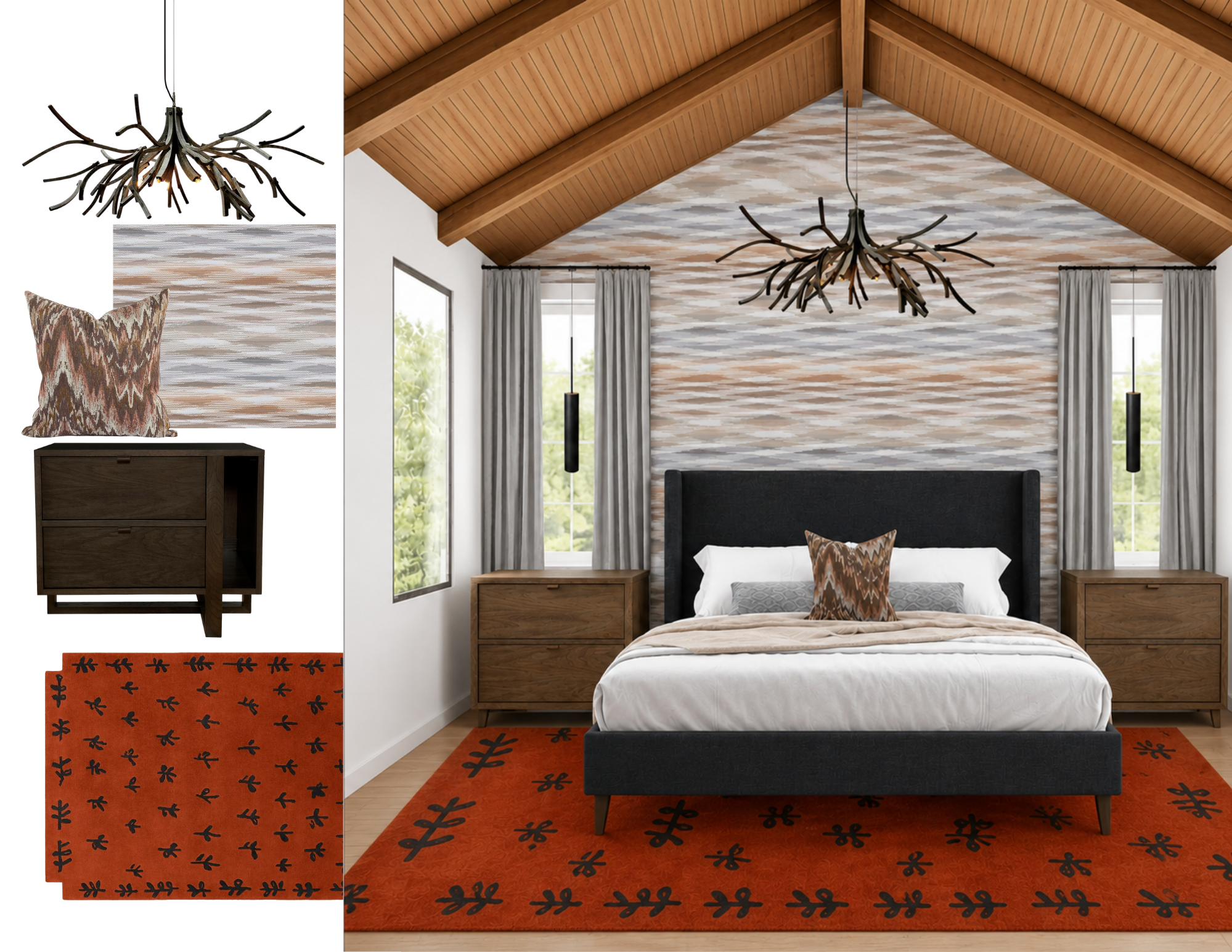
For this room, we fell in love with the carpet from Nordic Knots as our keystone. The client wanted to keep their existing bed, upholstered in deep grey velvet, so we knew the space needed some bold colour to bring it to life. A wallpaper by Missoni adds a more muted nod to the rich rust tones in the carpet.
A keystone piece flips that process. Instead of choosing colours first and hunting for pieces to fit them, we let one piece with real character set the tone, then build the palette outward from there. A rug with an unexpected colour combination. A piece of art with a mood we want the whole room to borrow. A fabric with a print too good to relegate to a single throw pillow. Once that piece is chosen, the rest of the room's decisions get easier, not harder, every paint colour, every finish, every secondary fabric has something to respond to.
What Makes a Good Keystone Piece
Not every rug or painting can carry a room. The pieces that work tend to share a few things in common:
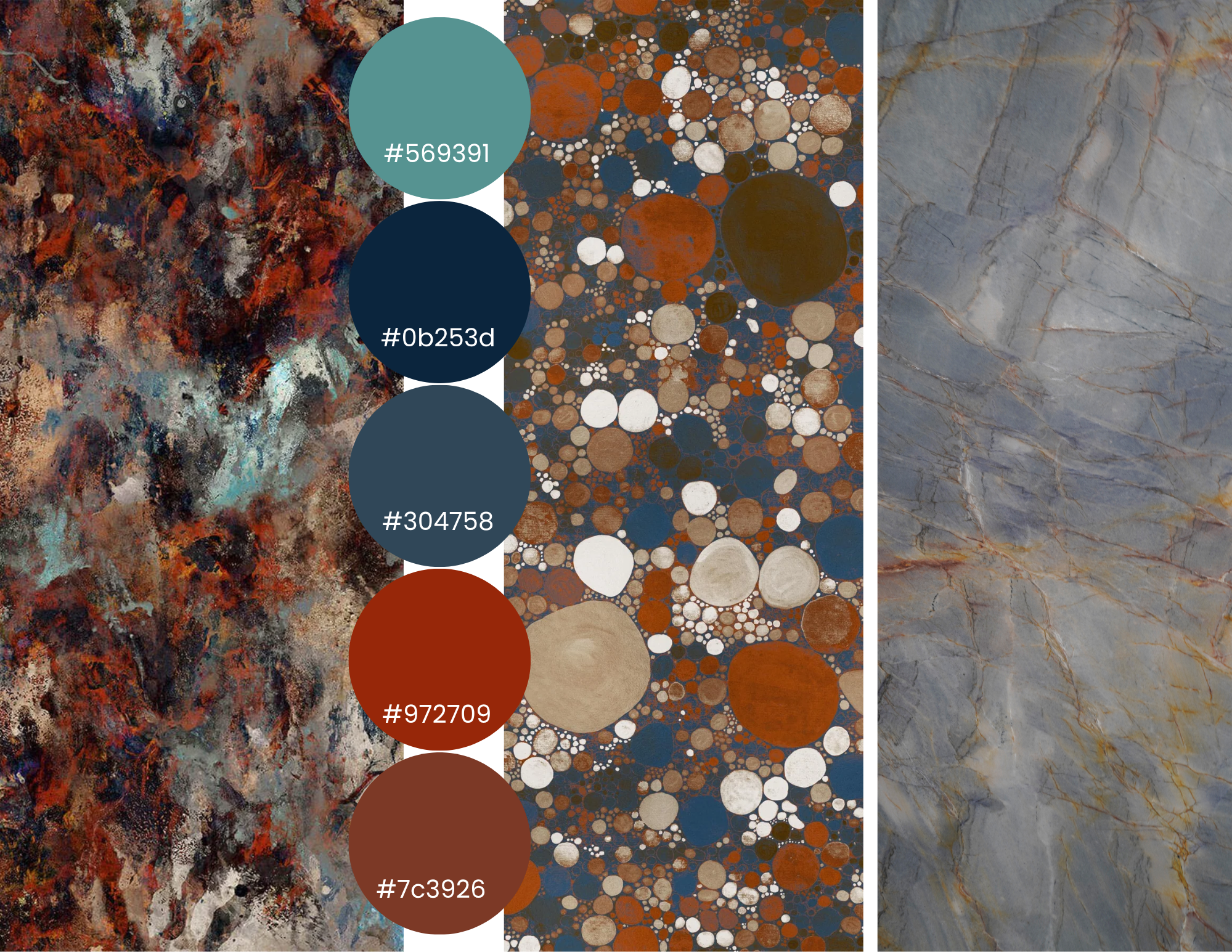
For this project, we started with two different wallpapers in similar tones for the powder rooms. This is the client's second home, and they wanted a boutique hotel meets art gallery feel. We went bold with the counters and stone to coordinate, which let us pull out a range of colours to carry throughout the spaces.
Complexity, not just colour. A great keystone piece usually has more than one colour or tone doing something interesting — which gives you multiple directions to pull the rest of the palette from, rather than just one note to repeat.
A mood, not just a look. The best keystone pieces set an emotional tone as much as a visual one — moody and layered, bright and playful, quiet and textural. That mood becomes the room's brief.
Enough presence to hold its ground. A keystone piece has to be strong enough that the room can be built around it without needing several more "statement" moments competing for attention. One anchor, not three.
How the Rest of the Room Follows
Once the keystone is chosen, the process becomes one of restraint as much as addition. We'll often pull two or three colours directly from the piece — sometimes literally matching a paint colour to a single thread in a rug — and let everything else in the room stay quieter by comparison. Walls, larger furniture pieces, and window treatments tend to sit in supporting tones, while smaller accents can pick up a secondary colour from the keystone to keep the room from feeling too matched or too flat.
The goal isn't for every piece to be equally loud. It's for the room to feel like it was built around a single, confident idea, because it was.
The Piece Doesn't Have to Be Expensive
One of the things people are often surprised by is that a keystone piece doesn't need to be the most expensive item in the room. We've built entire colour stories around a vintage chair found secondhand, or a piece of art a client already owned and hadn't thought to feature. What matters isn't the price tag — it's whether the piece has enough character to give the room somewhere to start.
Not sure what your room's keystone piece could be? Get in touch — we love helping clients find that one piece that pulls everything else into focus.